




|
||
| 【 UNIFORM 】 |
●Wear clothing that is not offensive to public order or morals. ●Be sure to try on your uniform and try jumping in it prior to the competition in order to confirm that all items to be worn while competing will be safe to wear. (Especially shoelaces, accessories, etc.) |
|
|---|---|---|
| 【 ROPES 】 |
●The use of beaded, wire, plastic and rubber ropes are prohibited. In addition, ropes that may dirty the stage or cause damage to the linoleum (that will be spread out over the stage) cannot be used. ●If more than one set of double dutch ropes will be used in the performance, then the extra ropes must be indicated as props on the registration form. |
|
| 【 PROHIBITED ACTS 】 |
If the DOUBLE DUTCH CONTEST Executive Committee determines that any of the following acts take place, then your team will be disqualified regardless of the competition proceedings. ●Acts which significantly interfere with the event preparation and operation. ●Dangerous acrobatic moves such as a front or back flip with a double rotation in the air. ●Altering team members. All members registers on a team must compete in the Performance event, so it is not permissible to add or change team members during the DDCJ2015. *Only in the case of an injury or unforeseen circumstance, may a decrease in team members be permitted. If this occurs with your team, you must notify the DOUBLE DUTCH CONTEST Executive Committee before you compete. ●Team members not registered to compete in the Speed event compete in it. ●Acts which intentionally interfere with other teams. ●Acts which may injure the spectators. (i.e. throwing or dropping a rope or ball into the spectator's seats) ●Acts which require cleaning the stage after the performance (i.e. use of confetti or water) ●Use of ropes of a material that dirties the stage or damages the linoleum covering. ●Acts which use fire. (i.e. flames or firecrackers) ●Acts offensive to public order or morals. |
|
| 【 MISC 】 |
●If a rope breaks during the Speed event or Performance event in the competition, the team will have only one chance to participate in that event again after a few other teams have competed. ●If a player is injured to the extent that the medical staff determines unfit to continue during the Speed event or Performance event in the competition, then the team’s participation in that event will be terminated at that time. |
|
| 【 DESCRIPTION 】 |
3 team members per team compete: 2 as turners (players who turn the ropes) and 1 as a jumper (player who jumps the rope). The purpose is to complete as many jumps as possible in 30 seconds. *There are changes in the Speed rules this year, so please read the rules carefully. |
| 【START & STOP SIGNALS】 |
●The signal to start is the word "Go!!" at the end of the DDC official speed BGM: "Double Dutch Contest. Speed. Judges ready? Jumpers ready? On your mark, Get set, Go!!" ●The signal to stop is when the buzzer sounds after 30 seconds. ●The BGM has a countdown at the end of the 30 seconds, so at 20 seconds into the time you will hear "Ten," and for the last 5 seconds, "Five, Four, Three, Two, One." ●The official speed BGM can be downloaded from the DDC website: 
|
| 【 PROCEDURE 】 |
1. The turners have the ropes completely still. The jumper waits to the right of the turner. 2. After the turners hear the start signal, they begin turning the ropes. The ropes should be turned in an alternating inward fashion, known as basic double dutch turning. 3. The jumper enters the ropes turned by the turners, and jumps in the "jogging step" style. 4. The event ends when the 30 second stop buzzer sounds. ●The jumper must jump facing the direction determined by the DOUBLE DUTCH CONTEST Executive Committee. ●If the ropes stop due to a mistake made during the event, the turners may begin turning the ropes again. There is no point deduction for mistakes. ●If the jumper gets caught on the ropes when the buzzer sounds, the jumper does not need to enter the ropes again and do a clean exit. There is no point deduction for mistakes. |
|
【 JUDGING METHOD 】 |
●The jumping style is the "jogging step," and each time the jumper's left foot touches the ground, one step will be counted for 30 seconds. Three judges will count each jumper, and the closest two scores of the three will be averaged to determine the official score. (Example) "Left foot, right foot, left foot, right foot, left foot" = 3 jumps |
| 【 DEDUCTIONS 】 |
●The turners and jumper should not move during the time period between the DDC speed's BGM words "Get set" and "Go." If the judges determine that it is obvious that during that time the jumper or turners began moving, or the jumper went over the start line, or the turners started turning the ropes, then the team will receive a "false start" deduction of 5 jumps from their total number of jumps. ●Each time actions which disturb or inhibit the judges from judging are made, the team will receive a deduction of 5 jumps from their total number of jumps. |
|
●What to do if the jumper makes a mistake and re-enters the ropes (*2015 new rule) If the ropes get caught during the event, there is no specific method for how the jumper must begin jumping again. It is fine if the jumper does not "leave the ropes" or "return to the position of the turner." There is also no deduction. However, as specified in the DOUBLE DUTCH CONTEST WORLD 2016 Contest Rules "3. Prohibited Acts," any acts which intentionally interfere with other teams will cause that team to be disqualified, so please be careful. |
|
| 【 DESCRIPTION 】 |
All members of the team participate in a double dutch performance to music in which technical ability, expression, choreography, and originality are judged. The Performance time limits are as follows: DOUBLE DUTCH CONTEST JAPAN 2016: 2 min. – 2 min. 30 sec. DOUBLE DUTCH CONTEST WORLD 2016: 2 min. – 3 min. |
|||||||||||||||
| 【START & STOP SIGNALS】 |
There are two ways a performance may begin, starting the BGM with the players on stage or off stage. 1. Players start on stage: Players wait on stage for the BGM to start. Then they begin their performance. 2. Players off stage: Players wait off stage for the BGM to start. Then they enter the stage and begin their performance. Players start on stage: 1. When the players are in position and ready to begin on stage, the team leader will raise his/her hand to signal that they are ready. 2. The person in charge of sound will start the BGM. 3. As soon as the music begins, the performance will begin. 4. As soon as the music ends, the performance will end. Players start off stage: 1. When the players are in position and ready to begin off stage, the team leader will raise his/her hand to signal that they are ready. 2. The person in charge of sound will start the BGM. 3. As soon as the music begins, the performance will begin. 4. As soon as the music ends, the performance will end. |
|||||||||||||||
| 【 BGM 】 |
●The performance BGM must be edited to the specified time limit, including special effect noises (fade out, echo, etc.), and be submitted in MP3 format prior to the competition. ●Information regarding such details as the method of submission will be sent to the representative of each team that registered. ●If there are technical difficulties with your BGM after your performance has begun, you will have just one chance to redo your performance after several other teams have performed, only if confirmation can be made by a video footage check. ●You may use different music for the DOUBLE DUTCH CONTEST each country qualifier 2016 and DOUBLE DUTCH CONTEST WORLD 2016. |
|||||||||||||||
| 【 PROPS 】 | If you plan to use a prop such as another rope, a ball, hat, etc. in addition to one set of double dutch ropes, please indicate that information when you register. | |||||||||||||||
| 【 ACROBATIC SKILLS 】 |
Acrobatic skills for the DOUBLE DUTCH CONTEST are defined as follows: Gymnastic skills, break dance moves, or circus stunts such as a front flip or jumping using body parts other than only feet (push-ups, donkeys, shifts, etc.). This includes skills done in pairs. ●If you intend to do an acrobatic move, please learn a safe way to practice the move from a specialist, and practice beforehand in a safe and well-planned manner. ●The same judging standards apply to all skippers, regardless of age or gender. ●Each judge (5 judges) for the Junior, U-19, and Open Division will judge acrobatic movements in addition to their designated judge category. ●If a skipper performs a seemingly dangerous approach, take-off, flip, or landing when doing an acrobatic move, his /her team will be disqualified, regardless of their ranking. | x
|||||||||||||||
| 【 JUDGING METHOD 】 |
DOUBLE DUTCH CONTEST WORLD 2016 JUDGING METHOD ●The judges will evaluate the performance based on the criteria listed below. ●The ranking of the Junior and U-19 Division teams will be determined by their overall scores. ●The ranking of the Open Division teams will be determined by their overall scores, and the top four teams will compete in a Freestyle Battle to determine their final ranks. ●If a team commits an act specified in the Contest Rules "3. Prohibited Acts," their performance will be stopped and they will be disqualified. PERFORMANCE JUDING CRITERIA AND SCORING METHOD "Technical Ability" (max 25 points), "Expression" (max 25 points), "Choreography" (max 25 points), "Originality" (max 25 points). Overall scores will be calculated as follows. Technical Ability + Expression + Choreography + Originality = Total Performance points (max 100 points)
|
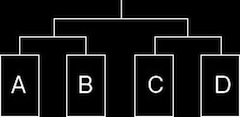
| 【 DESCRIPTION 】 | 1 minute or shorter freestyle double dutch performances (hereinafter referred to as "moves") will be conducted alternately between two teams, for a total of three moves each, to determine the better of the two teams. | ||
| 【START & STOP SIGNALS】 |
1. The MC will signal when to start. 2. The MC will signal when to end, after 1 minute has passed. |
||
| 【 PROCEDURE 】 |
1. The winner of a coin toss done by the MC will determine which team goes starts. 2. At the MC's signal, the DJ will start the music and the team that starts will do their first move. The move will finish when the team returns to their area on stage, or after 1 minute passes and the MC gives a signal to stop. ●When 50 seconds have passed, the MC will call out "ten." When doing a move, do not face the audience or judges. Face the opposing team. 3. Next, the opposing team will do one move. ●The team that is waiting must stay in the designated "waiting area" and be sure not to go beyond that area while waiting. 4. When both teams have done three moves, the battle will end. |
||
| 【 JUDGING METHOD 】 |
●Semi-final round: The teams will receive the verdict of the judges, and the winning teams will advance to the next round. ●Final round: When both teams have done three moves, the battle will end, and the judges will vote to determine the winner. ●In both rounds, there will not be additional rounds. The judges will decide on a winning team, and there will not be a tie. |
||
| 【 PROHIBITED ACTS 】 |
If it is determined that any of the following acts take place during the freestyle battle, it is possible to appeal to the judges before they take a show of hands to determine the winning team. After all of the judges discuss the issue at hand, the judging process will resume. ●Acts which intentionally interfere with the other team. ●Acts which may not be intentional, but in which the team steps beyond the "waiting area," and into the area of the opposing team. ●Acts in which the team making a move goes into the opposing team's "waiting area" and interferes with them. |
||
| 【 TOURNAMENT DIAGRAM 】 |
|

|

|

|

|
|---|